 listicle
7 Best Ways to Compare Insurance Quotes
Last Updated: November 7, 2026
Quick Summary
Comparing insurance quotes side by side is the only reliable way to see what you'll actually pay for the same protection, so compare three or four offers using identical limits, deductibles, and add-ons. A cheaper premium usually means less coverage, not a better deal, so check fees, discounts, and claims service before you buy.
- A trustworthy comparison site shows actual quote amounts before asking for your phone number.
- Run every offer through the same coverage and deductible checklist before comparing dollar figures.
- Keep the same garaging ZIP code on every quote so the comparison stays valid.
- Ask each carrier which discounts you qualify for and whether they can be stacked.
- Use an independent agent when your driving history, vehicles, or bundle needs confuse automated quoting.
Table of Contents
- Why Comparing Insurance Quotes Side by Side Beats Calling Around
- 1. Start With the Best Insurance Comparison Sites
- 2. Compare Car Insurance Rates on an Apples-to-Apples Basis
- 3. Compare Car Insurance Without Personal Information
- 4. Compare Insurance Rates by ZIP Code
- 5. Look Past the Premium: Total Cost, Fees, and Claims Service
- 6. Ask About Discount Eligibility and Stacking Before You Buy
- 7. Know When to Use an Independent Agent Instead of a Tool
- Frequently Asked Questions
Why Comparing Insurance Quotes Side by Side Beats Calling Around
Comparing insurance quotes side by side is the only reliable way to see what you'll actually pay for the same protection. Comparing three or four offers side by side is a practical way for Arizona drivers to see where real savings may be, rather than accepting the first renewal notice that arrives.
Calling one carrier tells you one price. It says nothing about whether a competitor would charge less for identical coverage, or whether the agent on the phone quietly dropped uninsured motorist protection to make the number look good. Side-by-side comparison exposes both tricks at once.
Below, we'll walk through the seven best ways to compare insurance quotes, from choosing a trustworthy comparison site to knowing when a licensed agent beats any tool. Here's what most guides get wrong: they compare premiums and stop there. The real differences hide in deductibles, exclusions, and how each company handles a claim.
1. Start With the Best Insurance Comparison Sites
The best insurance comparison sites pull live quotes from multiple carriers in one sitting, but not all of them are honest brokers of information. Some are genuine comparison services. Others exist to sell your phone number to call centers.
The Zebra's insurance comparison service shows real-time quotes from multiple companies and lets you buy online or speak with a licensed representative. Insurify compares car insurance quotes from more than 120 companies and says the process takes about two minutes. Compare.com presents offers from over 100 insurers in a side-by-side layout that makes differences easy to spot.
How to Tell a Trustworthy Comparison Site From a Lead Farm
A trustworthy site shows you actual quote amounts before asking for a phone number. A lead farm asks for your contact details first, then sells them to agents who call for weeks.
Watch for these signals:
- Quotes appear before contact info. Real comparison tools display prices, then offer to connect you with an agent.
- The site names its carriers. Vague "top insurers" language is a warning sign.
- No mandatory phone number. If the form won't submit without your number, you're the product.
- Privacy policy is specific. It should say exactly who receives your data and why.
Watch out: entering your details on three or four lead-generation sites in one afternoon can trigger a flood of calls that continues for months. Use one reputable site, or work with an agent who shops on your behalf.
These are the comparison services the article names, along with what each one offers.
| Comparison site | What it offers | Note |
|---|---|---|
| The Zebra | Real-time quotes from multiple companies | Buy online or speak with a licensed representative |
| Insurify | Compares quotes from more than 120 companies | Process takes about two minutes |
| Compare.com | Offers from over 100 insurers | Side-by-side layout makes differences easy to spot |
2. Compare Car Insurance Rates on an Apples-to-Apples Basis
Comparing car insurance rates only works when every quote covers the same limits, deductibles, and add-ons. A cheaper premium usually means less coverage, not a better deal.

A common mistake is comparing a full coverage quote against a state-minimum quote and treating the minimum as a better deal.
The Coverage and Deductible Checklist to Use on Every Quote
Run every offer through the same checklist before you compare a single dollar figure:
- Bodily injury liability limits (per person and per accident)
- Property damage liability limit
- Collision coverage and deductible amount
- Comprehensive coverage and deductible amount
- Uninsured and underinsured motorist coverage
- Personal injury protection or medical payments
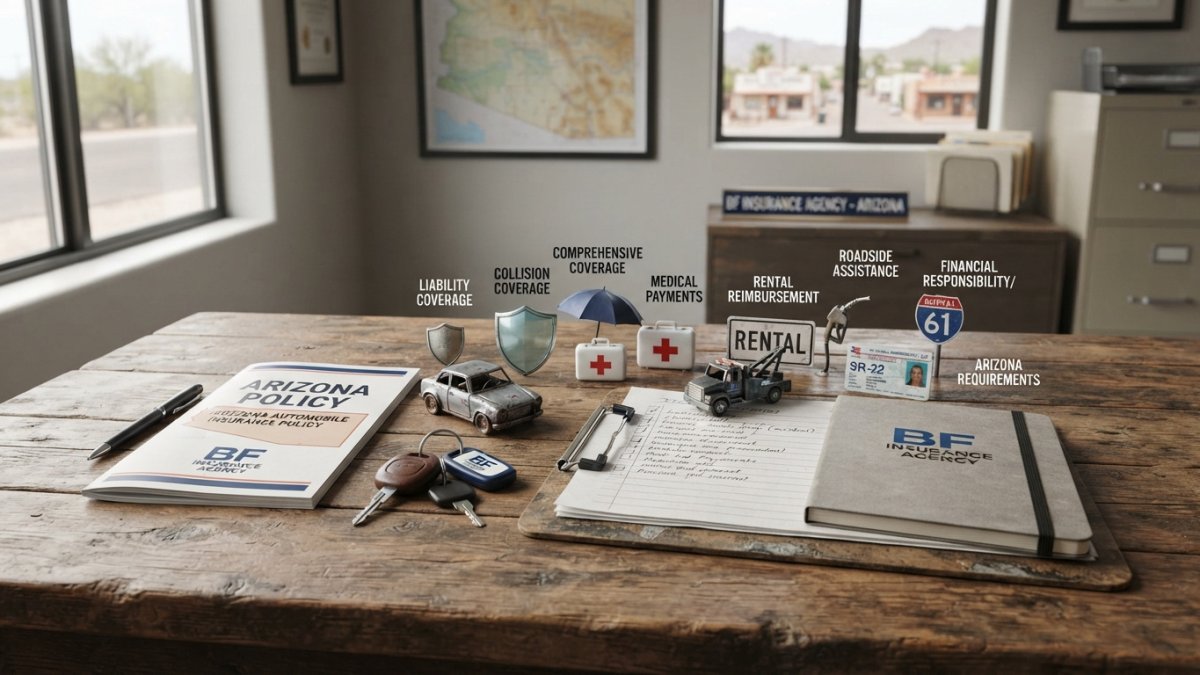
- Rental reimbursement and roadside assistance
- Policy term length and payment schedule
Arizona sets minimum auto insurance requirements, and you can review the state minimum requirements before you start. If you want to go deeper on each line item, our guide to Arizona auto insurance coverages worth knowing explains what every option actually protects.
3. Compare Car Insurance Without Personal Information
You can compare car insurance without personal information by using tools that show sample rates by driver profile, or by requesting quotes through an agent who shops anonymously on your behalf. Both approaches keep your phone number and email out of lead databases.
This matters more than most shoppers realize. Every quote form you complete creates a record, and some sites may share that information with multiple agents, which can lead to a lot of follow-up calls.
Practical ways to compare without handing over your details:
- Use sample-rate pages. Many comparison sites publish average rates by age, vehicle, and driving record without requiring a form.
- Use a dedicated email address. Create one for insurance shopping and keep your primary inbox clean.
- Give a Google Voice number. It rings your phone but can be silenced when the calls pile up.
- Work through an independent agent. One professional shops the market for you, so your information goes to carriers only when you're ready to buy.
4. Compare Insurance Rates by ZIP Code
Insurance rates often vary by location because claim frequency and repair costs can differ from one area to another. To compare insurance rates by ZIP code, enter your actual garaging address on every quote, not your mailing address or a nearby city.
Two households a few miles apart can see meaningfully different premiums for identical coverage. Urban ZIP codes typically carry higher rates than rural ones because of theft, traffic density, and repair costs. The National Association of Insurance Commissioners publishes consumer resources explaining how insurers use location and other rating factors.
Some online comparison tools start with your ZIP code and a few questions, then match you with providers in your area.
Keep the ZIP consistent across every quote. If you compare one quote using your home address and another using your workplace, you're not comparing anything.
5. Look Past the Premium: Total Cost, Fees, and Claims Service
The lowest premium is not always the lowest total cost. Policy fees, installment charges, and a weak claims process can erase the savings within a single year.
Ask every carrier three questions before you decide:
- What fees apply? Some insurers charge installment fees for monthly payments, policy fees at inception, or reinstatement fees after a lapse.
- What's the payment schedule? Paying in full often costs less than twelve monthly installments.
- How are claims handled? Ask whether the company uses its own adjusters, how quickly it typically responds, and whether you can track a claim online.
Financial strength matters too. Rating agencies grade insurers on their ability to pay claims, so it can be worth checking those ratings before you commit.
Claims service can vary widely even among carriers quoting similar premiums. Asking people you know about their claims experiences, and reviewing complaint records through your state insurance department, can help you weigh service alongside price.
6. Ask About Discount Eligibility and Stacking Before You Buy
Most insurers advertise discounts, but eligibility rules and stacking limits decide whether you actually get them. Ask each carrier which discounts you qualify for and whether they can be combined.
Common discounts include:
- Multi-policy bundling for auto and home
- Multi-vehicle discounts
- Safe driver and defensive driving course discounts
- Good student discounts
- Vehicle safety features such as anti-theft devices
- Paid-in-full and paperless billing discounts
- Loyalty or tenure credits
Stacking rules vary. Some carriers let you combine many discounts; others cap the total reduction. A carrier advertising a long discount list may apply only a few at once.
Bundling deserves its own conversation. Combining auto and home can lower both premiums, but the size of the savings depends on the carriers and your profile. Our breakdown of whether bundling home and auto insurance saves money covers how to run that comparison properly.
7. Know When to Use an Independent Agent Instead of a Tool
An independent agent is worth the phone call when your situation is complicated, when you want someone accountable for the recommendation, or when you're tired of forms. An online tool is faster for simple, single-policy comparisons.
Use an agent when:
- You have a non-standard driving history, older vehicles, or a claims record that confuses automated quoting.
- You're bundling home, auto, and life coverage and want the packages compared together.
- You've leased or financed a vehicle and need to confirm the coverage levels the lender requires.
- You want one person to call when a claim goes sideways.
Use a tool when you have a clean record, one vehicle, and simply want a fast read on the market.
One potential advantage of working with an independent agent is a single conversation that can cover multiple carriers, with a professional who can explain the differences between quotes. If you're weighing the two paths, our comparison of insurance brokers versus direct carriers lays out the trade-offs, and our article on why independent insurance agents are better makes the argument in full.
Comparing insurance quotes takes an afternoon, and a careful comparison can matter for years. BF Insurance Agency offers tailored auto, home and life insurance solutions for Arizona residents, with expert guidance through complex coverage options. Get started with BF Insurance Agency to discuss your options.
Frequently Asked Questions
What is the best site to compare insurance quotes?
There is no single best site for everyone. Large online aggregators pull quotes from many carriers, while other tools match you with providers based on your location. The right choice depends on whether you want a fast online comparison or a licensed person to walk you through coverage. Many shoppers use one aggregator for a baseline, then confirm the final numbers with an independent agent.
Can you compare car insurance rates without sharing personal information?
You can get a rough estimate with only a ZIP code, vehicle year, make and model, and general driving history. Full quotes require your name, date of birth, address and sometimes a Social Security number for a credit-based insurance score. Start with anonymous estimates to narrow the field, then share details only with the two or three insurers or agents you are seriously considering. Use a dedicated email address to limit marketing follow-up.
What should you compare besides the price of an insurance quote?
Match coverage limits, deductibles, exclusions and endorsements across every quote before comparing premiums. Check the annual premium against monthly payment totals, since installment fees add up. Review claims handling, customer service ratings and financial strength ratings. Ask whether roadside assistance, rental reimbursement or gap coverage is included. A cheaper quote with lower liability limits or a higher deductible is not actually cheaper for the same protection.
How many insurance quotes should you get before choosing a policy?
Three to five quotes is enough for most drivers and homeowners. Fewer than three and you may miss meaningful savings; more than five rarely changes the decision and increases the chance your contact details get sold to lead generators. Compare each quote against the same coverage checklist so the numbers are truly comparable. If one quote is far below the rest, read the exclusions carefully before assuming it is the better deal.
Does comparing insurance quotes affect your credit score?
Requesting quotes does not affect your credit score. Insurers may use a credit-based insurance score depending on state rules, and that inquiry is generally a soft one used for rating. Shopping multiple insurers within a short window is treated as rate shopping and does not damage your credit. Your driving history, vehicle, ZIP code and coverage choices have a larger effect on your premium than the act of comparing quotes.