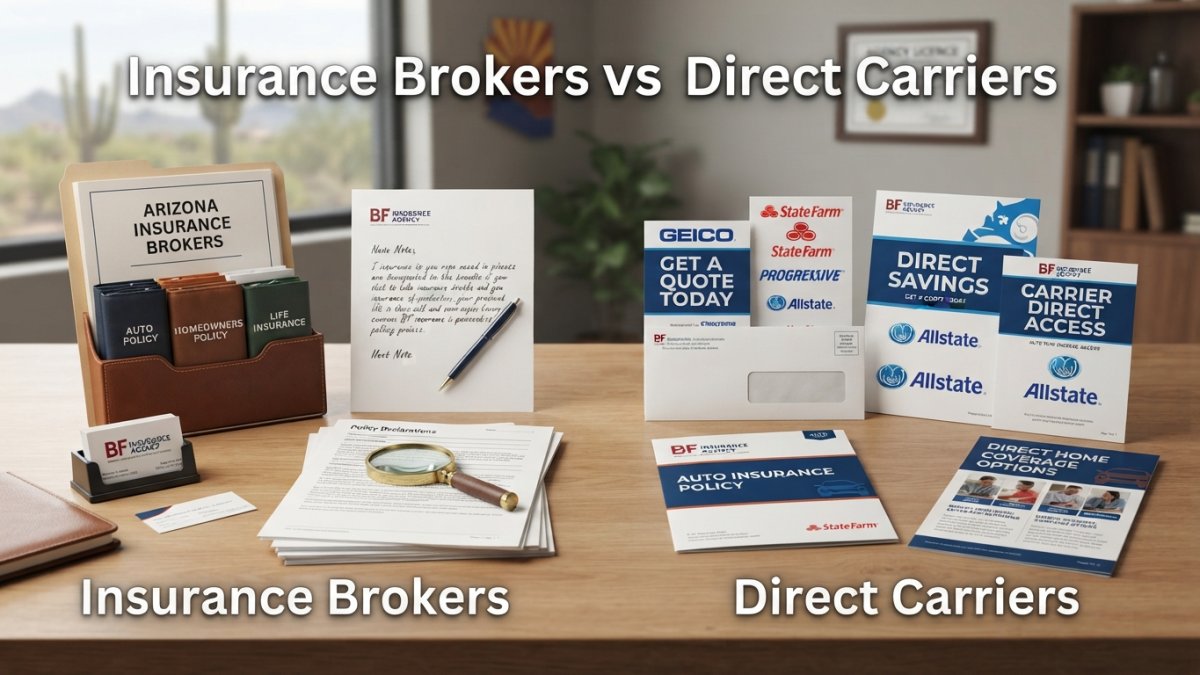
 comparison
Why Independent Insurance Agents Are Better in 2026
Table of Contents
- What an Independent Insurance Agent Actually Does
- Independent Insurance Agent vs Captive Agent: How They Differ
- Pros and Cons of Independent Insurance Agents
- How Agent Compensation Works and What It Means for You
- Carrier Access and Eligibility: The Limits Nobody Mentions
- How to Compare Policies Beyond the Premium
- Questions to Ask an Insurance Agent Before You Commit
- Which Buying Channel Fits Your Situation?
- Frequently Asked Questions
Last Updated: October 20, 2026
What an Independent Insurance Agent Actually Does
An independent insurance agent is a licensed professional who sells policies from multiple insurance companies rather than working for a single carrier. This guide from BF Insurance Agency breaks down where independent insurance agents genuinely outperform the alternatives, and where they don't.
Here's the core tension: independent insurance agents are better for most shoppers who want real choice, but not for every situation. The value comes from carrier access, quote comparison, and advocacy at claim time.
We'll show you exactly how the three buying channels differ, what agent compensation actually looks like, and how to compare policies beyond the premium.
Independent Insurance Agent vs Captive Agent: How They Differ
The difference is simple: a captive agent sells one carrier's products, while an independent agent sells many. That single structural fact drives almost every other trade-off.

Captive Agents: One Carrier, One Set of Products
A captive agent works exclusively for one insurance company. Their product knowledge runs deep on that carrier's endorsements, discounts, and underwriting quirks. The limitation is obvious: if that carrier's rates climb or its underwriting tightens, the agent has nothing else to offer you.
Independent Agents: Multiple Carriers, More Options
Independent insurance brokers hold appointments with several carriers and can place your coverage where it fits best. When one company declines a risk or prices it poorly, the agent moves to the next. The NAIC consumer guide to choosing an insurance agent explains this independent-versus-captive split in plain terms.
| Feature | Independent Agent | Captive Agent | Buying Direct |
|---|---|---|---|
| Carriers available | Multiple | One | One |
| Quote comparison | Yes, side by side | No | No |
| Product depth | Broad | Deep on one carrier | Deep on one carrier |
| Claims help | Yes | Yes | Limited |
| Best for | Complex or changing needs | Simple, loyal buyers | Self-directed shoppers |
Pros and Cons of Independent Insurance Agents
The honest answer is that independent insurance agents win on flexibility and lose on simplicity. Both sides deserve a fair hearing.
Where Independent Agents Win
Carrier access is the headline. One application, several quotes, and a real conversation about which policy limits and deductibles make sense for your situation. Independent agents also do policy research for you, explain exclusions and endorsements in plain language, and often provide claims support when a carrier pushes back. Personalized service matters most during a renewal or a dispute, not at the point of sale.
Where They Fall Short
Not every carrier appoints every agent. An independent agent's carrier access is limited to the companies that have contracted with that agency, so "multiple carriers" never means "all carriers." Some agents also lean toward carriers that pay higher commission, which is why you should ask directly. And an independent agent still can't beat a direct writer's captive-only pricing on a simple, clean risk.
How Agent Compensation Works and What It Means for You
Most independent agents are paid by the insurance company, not by you, usually through a commission on the premium. That structure creates a real conflict worth understanding.
Higher-premium policies generally generate higher commissions, which is why NerdWallet's guide to independent insurance agents flags commission incentives as something consumers should weigh. A good agent discloses how they're paid and recommends coverage based on your risk profile, not the payout.
Carrier Access and Eligibility: The Limits Nobody Mentions
Here's the part competitors gloss over: an independent agent's power stops at underwriting. Every carrier has eligibility rules, and your risk profile determines which ones will even quote you.
A driver with a recent at-fault claim, a home with an older roof, or a business with a claims history may find several carriers decline outright. Independent agents handle this better than captive agents because they have more doors to knock on, but the doors are not unlimited.
How to Compare Policies Beyond the Premium
The cheapest quote is rarely the cheapest policy. Premium is one input in a total-cost calculation that also includes deductibles, fees, exclusions, endorsements, and what happens at renewal. Comparing only the premium is the most common, and most expensive, shopping mistake.
The total-cost framework
Compare every option on these line items, side by side, before you decide:
- Policy limits: liability and property limits, and whether they meet your lender's or lease requirements. A lower premium often reflects a lower limit, not a better rate.
- Deductible: a higher deductible lowers premium but raises your out-of-pocket cost at claim time. Compare the premium difference against the deductible difference, a small premium savings for a large deductible increase is usually a bad trade.
- Exclusions: what the policy will not pay for, especially water damage, wear and tear, and business use. Two policies with the same premium can differ sharply on exclusions.
Why savings are not guaranteed
An independent agent can compare carriers, but comparison does not guarantee a lower price. Your risk profile determines which carriers will quote you, and a direct writer's captive-only pricing can beat an independent agent's quote on a simple, clean risk. Treat any savings claim as a hypothesis to test, not a promise, ask for the comparison in writing and check the line items above.
How to read a quote comparison
Ask for a written comparison showing limits, deductibles, exclusions, and endorsements side by side, not just three premium numbers. Then ask two questions of every column: What would I pay out of pocket at claim time? and What would change at renewal? Agents who resist this are telling you something.
A worked example of the trap
Suppose one quote is lower by a modest monthly amount but carries a substantially higher deductible and excludes water damage that the higher quote covers. On paper the first quote looks cheaper; at claim time the out-of-pocket difference can erase the premium savings and then some. The point is not that the higher quote is always better, it is that premium alone cannot tell you which policy costs less when you need it.
Questions to Ask an Insurance Agent Before You Commit
The right questions separate a broker from an order-taker. Bring this list to your first call:
- Which carriers do you represent, and are you appointed with all of them?
- How are you compensated on this policy?
- Will you show me a written comparison of limits, deductibles, and exclusions?
The Insurance Information Institute's guidance on shopping for insurance reinforces one point: coverage needs come before price, every time.
Which Buying Channel Fits Your Situation?
Match the channel to your situation rather than the marketing. The table below is a starting point, but the reasoning behind each row matters more than the row itself, because the same household can fit two channels depending on how its needs change.
| Your Situation | Best Channel | Why |
|---|---|---|
| First home, multiple policies to bundle | Independent agent | Quote comparison across carriers and help coordinating effective dates, limits, and endorsements so the bundle discount actually holds |
| Clean record, simple auto policy | Buying direct | Fast, low-touch, and often competitive on a single clean risk; you trade advice and claims advocacy for speed |
| Loyal to one brand, simple needs | Captive agent | Deep product knowledge on that carrier's discounts and endorsements; limited if underwriting tightens |
| Non-standard risk or claims history | Independent agent | Broader carrier access, though still limited to the agency's appointment list |
| Business or life coverage needs | Independent agent | Policy research, coordination across lines, and help with endorsements and exclusions |
| Unusual property (older roof, high value, coastal or wildfire exposure) | Independent agent, with caveats | More doors to knock on, but confirm which carriers on the panel will actually quote the risk before assuming a market exists |
When buying direct may be the better fit
Direct writers sell one carrier's product without an agent in the middle. For a renter with a single auto policy, a clean driving record, and no interest in a coverage review, direct can be faster and price-competitive. The trade-off is real: you handle the comparison yourself, you have no advocate if a claim is disputed, and you may not see endorsements or limits that would have closed a gap.
When a captive agent may be the better fit
A captive agent's value is depth on one carrier: knowing which endorsements stack, which discounts apply, and how that insurer's underwriting behaves. If you are loyal to a brand, have simple needs, and value a single relationship, a captive agent can serve you well. The limitation is structural, if that carrier's rates climb or it declines your risk at renewal, the agent has no alternative to offer.
When an independent agent is the better fit
Independent agents earn their keep on complexity and change: multiple policies to coordinate, a non-standard risk, a business exposure, or a household whose needs shift at renewal. They can compare quotes side by side, explain exclusions and endorsements, and advocate at claim time. They are not a guarantee of savings, and their carrier access stops at their appointment list, so ask which carriers they represent before assuming your current insurer was compared.
A short decision sequence
- Count your policies and exposures. One simple policy points toward direct or captive; multiple policies or a business exposure points toward an independent agent.
- Check your risk profile. A recent claim, an older roof, or a coastal or wildfire exposure narrows the carrier pool, confirm an independent agent actually has carriers that will quote you.
- Decide how much advice you want. If you want a coverage review and claims help, an independent agent fits; if you want speed and self-service, direct fits.
- Compare beyond the premium. Ask for limits, deductibles, exclusions, and endorsements side by side before you decide, regardless of channel.
Frequently Asked Questions
Is it better to go through an independent insurance agent?
It depends on what you need. Independent insurance agents can quote multiple carriers at once, which saves time and gives you more policy options to compare. They also tend to be useful when your situation is non-standard, such as a mixed driving history or an older home. Captive agents and buying direct work fine if you already know the carrier you want. The main advantage of independent agents is choice and policy research, not a guaranteed lower rate.
How do independent insurance agents get paid?
Independent agents are typically paid through commissions from the insurance companies whose policies they sell, not by a separate fee charged to you. That means the quote you receive usually already includes the agent's compensation. Ask your agent directly which carriers pay them more and whether they receive bonuses for volume. A transparent agent will explain this without hesitation, and it helps you judge whether a recommendation is driven by fit or by commission.
Can an independent insurance agent compare quotes from multiple insurers?
Yes, that is the core function of an independent insurance broker. Because they hold appointments with several insurance carriers, they can run your risk profile through multiple underwriting systems and present side-by-side policy options. Ask how many carriers they will actually check and whether any of your preferred companies are excluded. Carrier access varies by agency, so confirming the list upfront prevents surprises later.
What are the disadvantages of using an independent insurance agent?
The main drawbacks are limited carrier access and potential commission bias. An independent agent can only quote companies they are appointed with, so a direct insurer may still beat their best offer. Some agents also earn higher commissions on certain policies, which can color recommendations. Ask for quotes in writing, compare policy limits and deductibles, and request a clear explanation of why a specific carrier was chosen over the alternatives.
What questions should I ask an independent insurance agent?
Ask which carriers they represent, how they are compensated, and whether they receive bonuses tied to specific companies. Request a written comparison showing policy limits, deductibles, and exclusions for each option. Ask how claims are handled, whether they review your coverage at renewal, and what happens if you need to file a claim after hours. Also confirm they are licensed in your state and ask for a sample policy so you can read the exclusions yourself.
The real challenge isn't finding an agent. It's finding one who shows you the full picture, including the carriers they can't access and the commission behind each recommendation. BF Insurance Agency offers personalized coverage, bundled auto and home solutions, and guidance on meeting state-mandated requirements, all built around Arizona residents. Get started with BF Insurance Agency and compare your options with someone who explains the trade-offs instead of hiding them.